
A simple word can transform a life. For millions of Americans with disabilities, service dog commands represent the bridge between dependence and independence, between isolation and full participation in society. These carefully trained verbal and visual cues enable specially trained dogs to perform life-changing tasks that help their handlers navigate daily challenges with confidence and safety.
Service dog commands are far more than basic pet obedience—they’re precisely crafted tools that allow trained animals to assist people with physical disabilities, psychiatric conditions, and medical needs. While most service dogs learn over 30 different commands during their extensive training, they typically focus on performing 1-5 main disability-related tasks that directly address their handler’s specific needs.
Understanding these commands and their applications is essential for anyone considering a service dog, current handlers looking to expand their dog’s capabilities, or professionals working in the disability assistance field. This comprehensive guide explores the essential commands that make service dogs such powerful partners in promoting independence and improving quality of life.
What Are Service Dog Commands
Service dog commands are specific verbal or visual instructions given to trained service dogs to direct their behavior and task performance. Unlike basic pet training commands, these instructions are designed to enable dogs to perform work or tasks that directly assist individuals with disabilities in their daily lives.
The Americans with Disabilities Act (ADA) defines service dogs as animals that are individually trained to perform tasks for people with disabilities. This legal framework requires that service dogs respond reliably to commands that control their behavior in public spaces and enable them to perform their designated assistance tasks. The verification successful waiting for proper command response is crucial for maintaining public access rights.
Most service dogs typically learn a comprehensive vocabulary of commands during their 18-24 month training period. However, while they may understand dozens of instructions, each dog specializes in performing specific tasks tailored to their handler’s disability. A diabetic alert dog, for example, focuses primarily on blood sugar detection commands, while a mobility assistance dog emphasizes physical support and retrieval commands.
These commands fall into several categories: foundational commands that ensure public access and safety, task-specific commands that address particular disabilities, and behavioral management commands that maintain the dog’s focus and professionalism in various environments. The precision and reliability of command response distinguishes service dogs from emotional support animals or therapy dogs.
Essential Basic Service Dog Commands
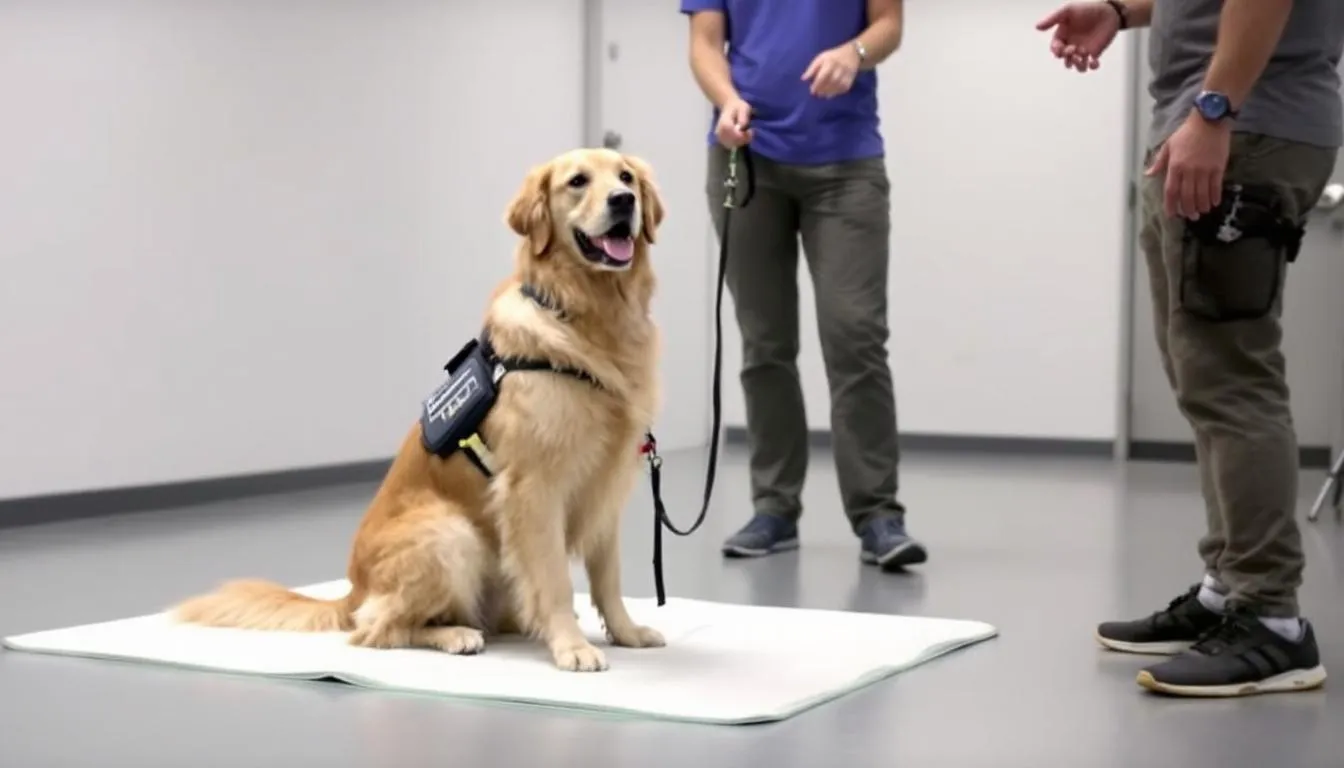
Every well trained service dog must master a set of foundational basic obedience commands before progressing to specialized task training. These basic commands form the cornerstone of public access behavior and ensure the safety of both the handler and the general public.
The “sit” command establishes immediate position control and is often the first command taught in any training program. When a disabled handler gives this command, the dog must immediately sit and maintain that position until released or given another instruction. This command is essential for situations like waiting in line, navigating crowded spaces, or when the handler needs the dog to remain stationary.
“Stay” extends the sitting position, requiring the dog to maintain their current position regardless of distractions. This command lets handlers move away from their dog temporarily while ensuring the animal remains in place. The duration and distance of the stay gradually increases during training, eventually allowing handlers to leave their dog for several minutes if necessary.
The “wait” command provides temporary pause control, particularly valuable for safety situations. Unlike “stay,” which requires the dog to remain in position until specifically released, “wait” is a shorter-duration command used when approaching doors, curbs, or potential hazards. This command helps prevent accidents and gives handlers time to assess their environment.
“Come” serves as the primary recall command for emergency situations. A reliable response to this command can be lifesaving, particularly if a service dog becomes separated from their handler or needs to return quickly from a distance. The command must work regardless of distractions or competing interests in the environment.
“Leave it” prevents the dog from being distracted by food, objects, or other animals while working. This command is crucial for maintaining focus in public spaces where numerous temptations exist. A service dog must ignore dropped food, approaching pets, or interesting smells that might otherwise capture their attention.
The general correction command “no” stops unwanted behavior immediately. While positive reinforcement dominates service dog training, handlers need a clear way to communicate when their dog is engaging in inappropriate behavior that could compromise their public access rights.
“Let’s go” functions as a movement command that redirects the dog’s attention back to their handler and maintains forward momentum. This command helps refocus a distracted dog and signals the beginning of movement or travel.
Mobility Assistance Commands
For individuals with physical disabilities, mobility assistance commands enable service dogs to provide crucial physical support and task performance. These commands transform dogs into living tools that can dramatically improve their handler’s independence and quality of life.
“Get it” instructs the dog to retrieve specific dropped items or needed objects. This command is particularly valuable for people who use wheelchairs or have difficulty bending. The dog learns to identify and bring back keys, medication bottles, phones, or other essential items that might otherwise be inaccessible to their handler. Advanced training includes retrieving items from different surfaces, heights, and locations throughout the home or public spaces.
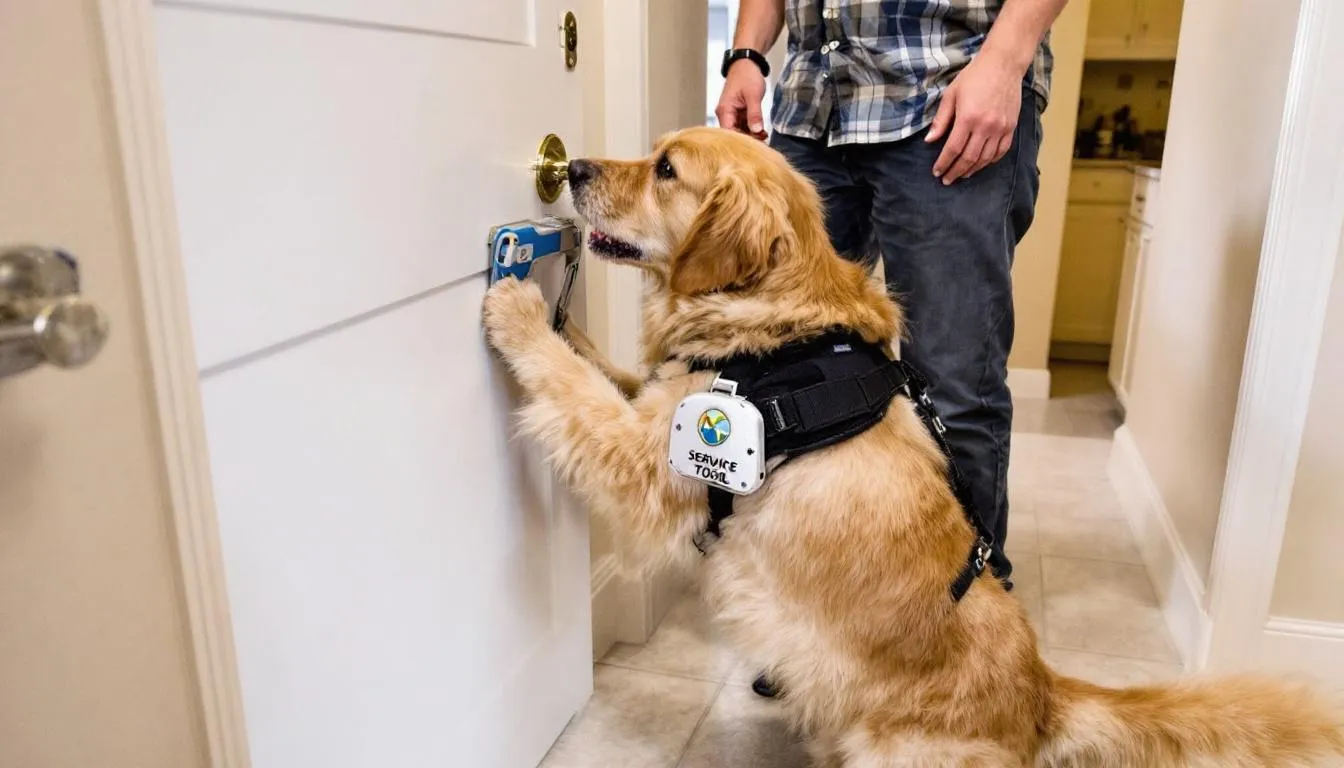
The “tug” command enables dogs to open doors, drawers, or assist with removing clothing. Dogs trained in this command can pull on specially attached straps or handles to open heavy doors that might be challenging for their disabled handler. This same command can help with removing jackets, socks, or other clothing items, providing essential assistance with daily personal care tasks.
“Heel” or “side” positions the dog beside their handler for balance and support. This command is crucial for individuals who need physical stability while walking. The dog maintains a steady position at the handler’s side, providing a stable point of contact that helps prevent falls and supports confident movement through various environments.
“Touch” or “here” directs the dog to a specific location or positions them strategically. This command helps handlers guide their dog to precise positions where physical support is needed, such as near a chair for transfer assistance or beside a bed for nighttime support. The command also helps position the dog out of the way when space is limited.
“Go to bed” sends the dog to their designated resting area to wait for the next command. This command is essential for maintaining appropriate space in public venues like restaurants or medical offices, where the dog needs to settle quietly without occupying walkways or disturbing others.
Additional mobility commands include instructions for turning on lights, picking up medications, and assisting with various mobility tasks specific to the handler’s needs. These commands are often customized based on the individual’s living environment and daily routine requirements.
Psychiatric and PTSD Service Dog Commands
Psychiatric service dogs use specialized commands to help handlers manage mental health conditions, including post-traumatic stress disorder, anxiety disorders, and depression. These commands enable dogs to provide targeted support during episodes and help maintain emotional stability.
The “nudge” command interrupts anxiety attacks, nightmares, or dissociative episodes by providing gentle physical contact that grounds the handler in the present moment. When a dog detects signs of distress or receives this command, they use their nose or paw to create physical contact that can interrupt harmful thought patterns or behaviors. This interruption often prevents episodes from escalating and helps the handler regain emotional control.
“Lap” or “visit” provides deep pressure therapy through the dog’s body weight and warmth. This command instructs the dog to position themselves on or against their handler’s body to relieve anxiety, reduce stress hormones, and provide comforting physical contact. The pressure and companionship can significantly reduce symptoms of panic attacks, depression, or PTSD episodes.
“Snuggle” offers a more intensive form of comfort, typically used during severe anxiety or depression episodes. This command encourages the dog to provide close physical contact and warmth, which can help stabilize the handler’s emotional state and provide a sense of security during vulnerable moments.
“Alert” warns the handler of approaching anxiety attacks or other psychiatric episodes. Dogs trained in this command learn to recognize early warning signs of their handler’s mental health episodes—changes in breathing, body language, or stress indicators—and provide advance warning. This early detection allows handlers to implement coping strategies before symptoms become overwhelming.
Specialized commands for grounding techniques help handlers experiencing PTSD episodes remain connected to reality. These might include commands that direct the dog to retrieve specific comfort objects, guide the handler to a safe space, or perform repetitive tasks that help restore emotional equilibrium.
Interruption commands address harmful behaviors by redirecting the handler’s attention and breaking cycles of self-destructive actions. The dog might interrupt scratching, hair-pulling, or other compulsive behaviors through gentle physical intervention that doesn’t restrict the handler but provides alternative focus.
Specialized Task-Specific Commands
Beyond basic obedience and general assistance, many service dogs learn highly specialized commands tailored to their handler’s specific medical conditions or disability-related needs. These advanced commands often represent the most critical aspect of the dog’s service to their person.
“Focus” redirects the dog’s attention to their handler in distracting environments. This command is essential when working in crowded, noisy, or stimulating locations where the dog might become overwhelmed or distracted. A reliable focus command ensures the dog maintains their professional attention and readiness to respond to other commands despite environmental challenges.
“Stand” positions the dog for balance support or specific task performance. This command is particularly important for handlers who need assistance with transfers, standing from seated positions, or maintaining stability while performing activities. The dog learns to position their body to provide optimal support for their handler’s specific physical needs.
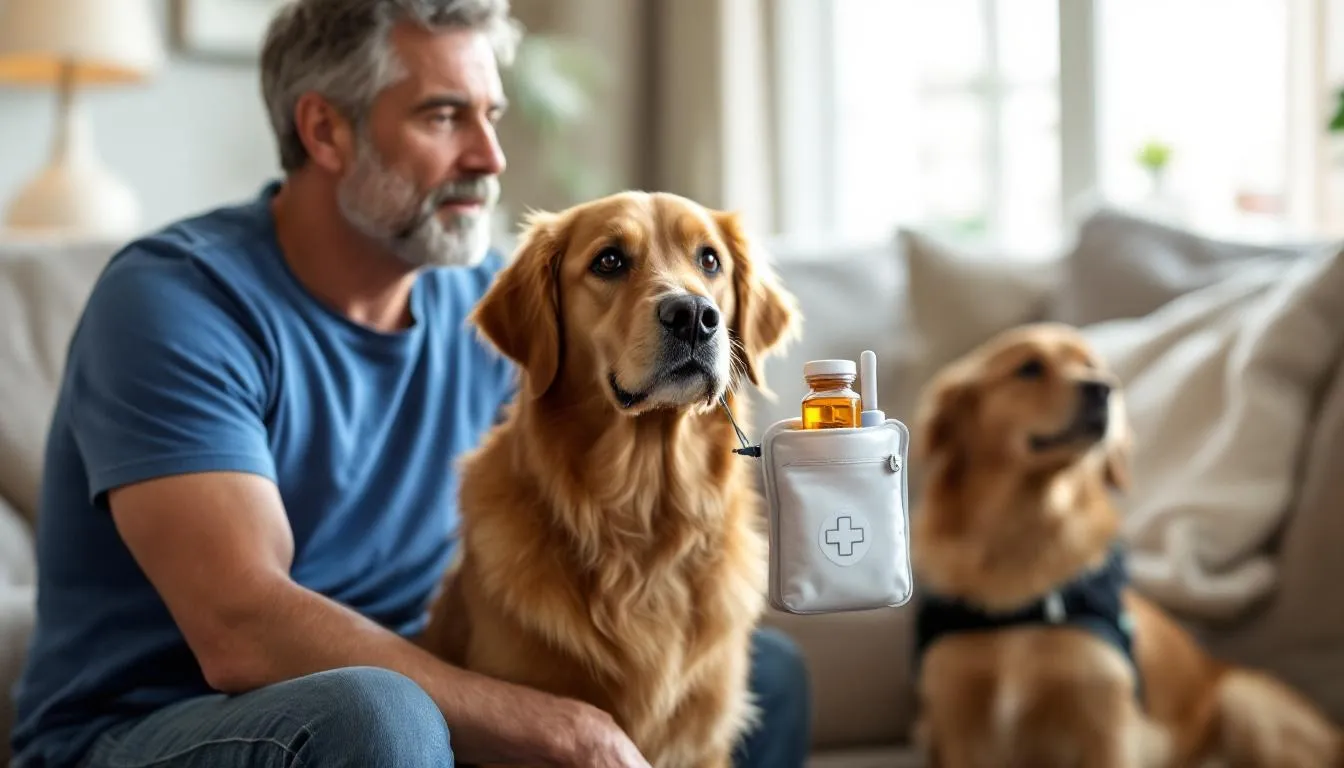
“Retrieve” encompasses a broad category of commands for fetching specific medical equipment, phones, or emergency items. Diabetic alert dogs might retrieve blood glucose monitors or emergency sugar sources. Seizure response dogs could bring medication or communication devices. The specificity of this command varies greatly depending on the handler’s medical requirements.
Medical alert commands for seizure detection and diabetic episodes enable dogs to recognize and respond to dangerous medical conditions. Seizure alert dogs learn to detect seizures before they occur and warn their handlers, while diabetic alert dogs can sense blood sugar changes and alert handlers to take corrective action. These life-saving commands require extensive training and natural aptitude from the dog.
Guide work commands for vision assistance include directional commands, obstacle avoidance instructions, and navigation aids that help blind or visually impaired handlers move safely through their environment. These commands require the dog to make intelligent decisions about safety while following their handler’s directions.
Hearing assistance commands alert deaf or hard-of-hearing handlers to important sounds in their environment. Dogs learn to respond to specific sounds—doorbells, smoke alarms, phones, or their name being called—and physically alert their handler through touch or other predetermined signals.
Commands vs Tasks: Understanding the Difference
Understanding the distinction between commands and tasks is crucial for anyone working with service dogs or considering this type of assistance. While these terms are often used interchangeably, they represent different aspects of service dog work that serve complementary functions.
Commands are specific instructions—verbal, visual, or physical signals—that handlers give to direct their dog’s immediate behavior. These are the individual building blocks of communication between handler and dog. Examples include “sit,” “retrieve,” “alert,” or “brace.” Commands require the dog to respond to human direction and represent the handler’s active management of their service animal.
Tasks, by contrast, are complete actions that assist with disabilities, which may involve multiple commands working together or may occur automatically without any command at all. For instance, a diabetic alert task involves the dog detecting blood sugar changes and then performing a sequence of behaviors—alerting the handler, potentially retrieving testing supplies, and possibly seeking help if the handler doesn’t respond appropriately.
Many essential service dog tasks actually occur without specific commands. Seizure detection, fall prevention, and some types of medical alerts happen when the dog recognizes specific conditions and responds according to their training. These automatic responses are just as valuable as command-based tasks and often represent the most sophisticated aspects of service dog work.
The relationship between commands and tasks becomes particularly important during training and daily life management. A single task might require mastering several individual commands. Opening doors, for example, might involve “touch” to approach the door, “tug” to operate the handle, and “wait” to ensure safe passage. Conversely, one command like “retrieve” might be used across multiple different tasks depending on what object needs to be brought to the handler.
Both commands and tasks are essential for effective service dog work. Commands provide handlers with active control over their dog’s behavior and ensure appropriate public conduct. Tasks address the specific disability-related needs that qualify the dog as a service animal under ADA regulations. Professional training programs carefully balance both elements to create well-rounded service dogs that respond reliably to direction while also providing automatic assistance when needed.
Training Service Dog Commands at Home
While professional training programs provide the most reliable path to a fully trained service dog, many handlers benefit from understanding home training principles for reinforcing commands, teaching new behaviors, or working with owner-trained service dogs. Successful home training requires dedication, consistency, and a thorough understanding of positive reinforcement techniques.
Starting with basic house training and fundamental obedience commands creates the foundation for all future learning. Before attempting any disability-related task training, dogs must master house rules, basic positioning commands, and impulse control. This foundation typically takes several months of consistent daily training sessions and establishes the learning framework for more complex behaviors.
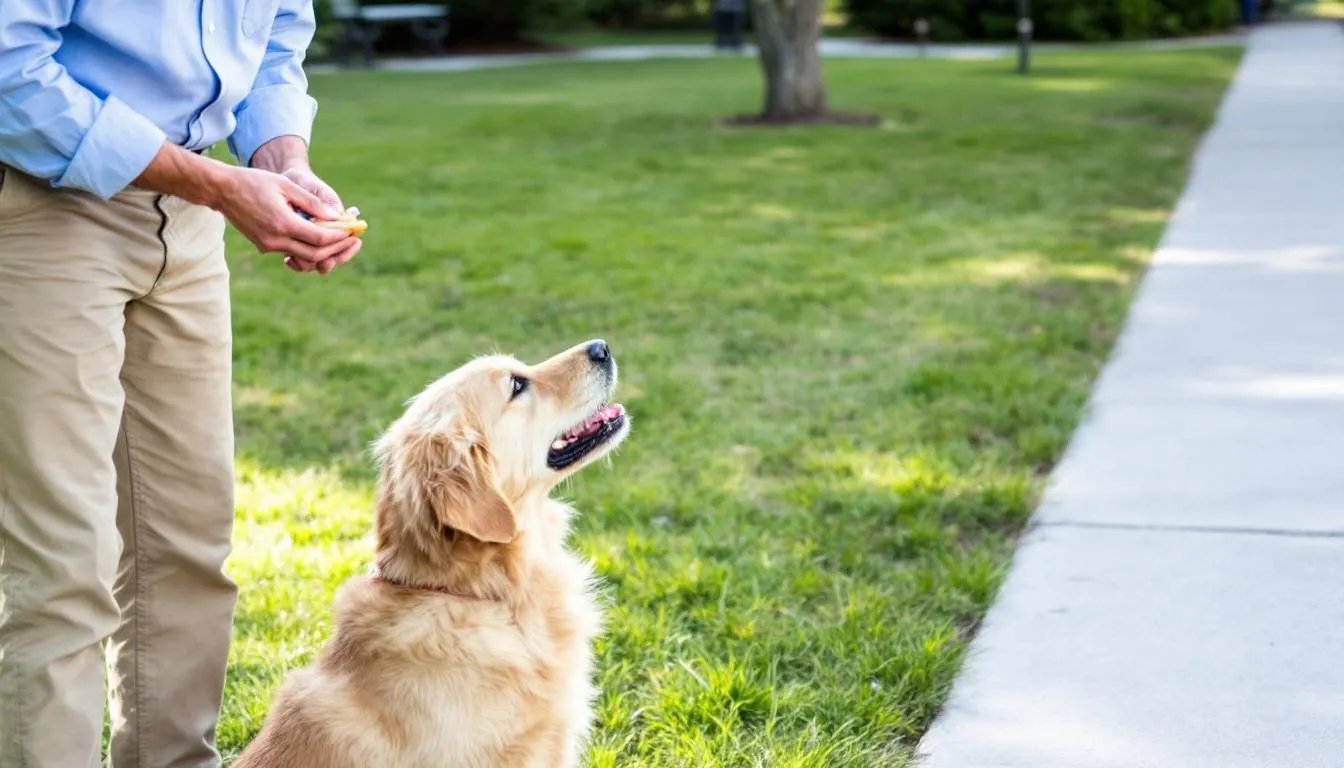
Positive reinforcement techniques form the cornerstone of effective service dog command training. This approach uses treats, praise, toys, or other rewards to encourage desired behaviors rather than punishing mistakes. The timing of rewards is crucial—dogs must receive positive feedback within seconds of performing the correct behavior to make the connection between their action and the reward.
Early socialization while teaching commands ensures that dogs can perform reliably in various environments. Home-trained service dogs must gradually practice their commands in increasingly challenging settings—quiet rooms, busy households, public spaces, and eventually crowded areas with significant distractions. This progressive exposure helps dogs generalize their training beyond the initial learning environment.
The progression from basic commands to disability-specific task commands should follow a logical sequence that builds complexity gradually. For example, retrieval training might start with simple “fetch” games, progress to bringing specific named objects, then advance to retrieving items from different locations or surfaces. Each stage must be thoroughly mastered before advancing to prevent confusion or unreliable responses.
Professional training programs and online certification options provide valuable support for home trainers. Organizations offer guidance on training techniques, task-specific instruction, and evaluation standards that help ensure training meets service dog requirements. However, handlers should research programs carefully, as quality and legitimacy vary significantly in this field.
Several key factors determine training success: consistency in commands and rewards, regular practice sessions, patience with the learning process, and realistic expectations about timelines. Most complex tasks require months of training to achieve reliability, and some dogs may not be suitable for service work despite intensive training efforts.
Command Reliability and Public Access
The reliability of service dog command responses directly impacts public access rights and the safety of everyone in shared spaces. Under ADA regulations, service dogs must be under their handler’s control at all times, which means responding consistently to commands regardless of environmental distractions or competing interests.
Service dogs must demonstrate reliable command following in public spaces to maintain their access rights. This includes responding to basic positioning commands in restaurants, stores, transportation, and other public venues. A dog that fails to respond to commands like “sit,” “stay,” or “leave it” in public settings may be legally removed from the premises, even if they are a legitimate service animal.
Proper command training ensures safety in crowded environments where distracted or uncontrolled behavior could cause accidents or disruptions. Service dogs must navigate through crowds, ignore other animals and interesting smells, and maintain their focus on their handler’s needs. The ability to respond immediately to redirecting commands prevents potentially dangerous situations.
Maintaining calm behavior while following commands demonstrates the professional nature of service dog work. Unlike pets, service dogs must work quietly and unobtrusively, following commands without excited behaviors, excessive vocalizations, or disruptive responses. This professional demeanor helps distinguish legitimate service dogs from inadequately trained animals.
The legal implications of poor command response extend beyond immediate access issues. Handlers may face increased scrutiny, business owners may question their rights, and the broader service dog community can suffer from negative perceptions created by poorly trained animals. Reliable command response protects both individual access rights and community acceptance.
Training for command reliability requires extensive practice in realistic conditions with gradually increasing distractions. Dogs must learn to respond consistently whether they’re in quiet homes, busy stores, or chaotic public events. This level of reliability typically requires professional training or extensive experience with service dog preparation techniques.
Regular assessment and refresher training help maintain command reliability throughout the dog’s working life. Even well-trained dogs can develop inconsistencies over time, and ongoing practice sessions help prevent the deterioration of essential skills that could compromise public access or safety.
Conclusion
Service dog commands represent far more than simple dog training—they’re the foundation of independence, safety, and dignity for millions of people with disabilities. From basic obedience commands that ensure public access to specialized task commands that address specific medical needs, these carefully taught behaviors transform trained dogs into indispensable partners in daily life.
The journey from basic commands like “sit” and “stay” to complex tasks like diabetic alerting or mobility assistance requires extensive training, patience, and expertise. Whether working with professional training organizations or pursuing owner-training approaches, success depends on understanding the distinction between commands and tasks, maintaining consistency in training methods, and ensuring reliability in all environments.
For individuals considering service dog partnerships, the investment in proper command training pays dividends in increased independence, improved safety, and enhanced quality of life. The difference between a well-trained service dog that responds reliably to commands and an inadequately prepared animal can literally be life-changing.
As the field of service dog training continues to evolve with new techniques, technologies, and applications, the fundamental importance of solid command training remains constant. These essential skills enable the remarkable partnerships between people and dogs that exemplify the best possibilities for assistive animal relationships.
If you’re considering a service dog or working to improve your current dog’s command reliability, consult with experienced professionals who understand both the technical requirements and the life-changing potential of these extraordinary partnerships. The right training approach can unlock possibilities that transform challenges into opportunities for greater independence and confidence.





Leave a Reply